April 17, 2026

stock market

Bitcoin price vs. Nasdaq: a captivating comparison of two influential markets. This analysis delves into their historical performance, exploring potential correlations and future trends. Understanding their interactions is key for investors and enthusiasts alike.

The narrative begins with a concise overview of Bitcoin’s evolution as a cryptocurrency and the Nasdaq’s significance as a major stock market index. We’ll then analyze their historical price comparisons, focusing on key market events and potential correlations.

Introduction to Bitcoin and Nasdaq

Bitcoin, a decentralized digital currency, emerged in 2009. Its unique design, based on cryptography and blockchain technology, allows for peer-to-peer transactions without intermediaries. This has led to its adoption as a store of value and a means of exchange, although its volatility remains a significant consideration. The Nasdaq Composite Index, on the other hand, represents a significant portion of the US technology sector.

It tracks the performance of 3,300+ publicly traded companies, providing a crucial gauge of the health and direction of the tech sector.The correlation between Bitcoin and traditional financial markets, such as the Nasdaq, has been a subject of considerable interest and debate. While some see Bitcoin as a hedge against inflation or a potential alternative investment, others view it as highly speculative and correlated with other risk assets.

Understanding the factors that influence the price of each asset is key to comprehending this relationship.

Bitcoin’s History and Role as a Cryptocurrency

Bitcoin’s development was driven by a desire for a decentralized, trustless financial system. Its underlying technology, blockchain, enables secure and transparent record-keeping of transactions. This decentralized nature is a key distinguishing feature compared to traditional currencies, which are typically managed by central banks. Bitcoin’s value fluctuates significantly based on market sentiment, supply and demand dynamics, and regulatory developments.

Nasdaq Composite Index and its Significance

The Nasdaq Composite Index reflects the performance of a large and diverse group of publicly traded companies, primarily focused on technology, but also encompassing other sectors. Its significance lies in its ability to track the overall health and performance of the technology sector and broader economic trends. The index’s performance is influenced by factors such as investor confidence, company earnings, and macroeconomic conditions.

Correlation between Bitcoin and Traditional Financial Markets

The correlation between Bitcoin and the Nasdaq has shown varied patterns over time. Some periods have demonstrated a positive correlation, suggesting that both assets move in similar directions. Other periods have shown little or no correlation, indicating that Bitcoin’s price may not always mirror the performance of the Nasdaq. The degree of correlation can be influenced by various factors, such as investor sentiment and market conditions.

Factors Influencing Bitcoin’s Price

Several factors influence Bitcoin’s price, including:

  • Market sentiment and speculation:
  • Regulatory developments and policies:
  • Adoption by businesses and individuals:
  • Technological advancements:
  • Major news events and announcements:

These factors interact in complex ways to determine Bitcoin’s price fluctuations.

Factors Influencing the Nasdaq’s Price

The Nasdaq’s price is driven by a variety of factors, including:

  • Company earnings and financial performance:
  • Investor sentiment and market confidence:
  • Interest rates and economic conditions:
  • Technological advancements and innovations:
  • Geopolitical events and global economic outlook:

These influences shape the overall direction of the index.

Historical Data: Bitcoin Price vs. Nasdaq Price (Past 5 Years)

Bitcoin Price Nasdaq Price
$28,000 15,000
$40,000 16,000
$35,000 17,500
$22,000 14,000
$30,000 15,500

Note: This table represents hypothetical data for illustrative purposes only. Actual historical data would be more complex and would require a wider range of sources and data points.

Historical Price Comparisons

Analyzing the historical performance of Bitcoin against the Nasdaq Composite provides valuable insights into their respective market dynamics. Understanding how these two assets have reacted to various market conditions, including bull runs, bear markets, and crises, can inform investment strategies and help predict future price movements. This section delves into the price comparisons over the past five years, highlighting correlations and contrasts between the two.

Bitcoin and Nasdaq Price Fluctuations Over Time

Bitcoin’s price volatility is significantly higher than that of the Nasdaq Composite. While both assets experience periods of growth and decline, Bitcoin’s price swings tend to be more dramatic. This volatility is a key characteristic of cryptocurrencies and is often attributed to factors like speculative trading and regulatory uncertainty. Conversely, the Nasdaq, as a broader index of US technology stocks, reflects the performance of a diverse group of companies, making its price movements generally less erratic.

Comparison During Market Events

Examining the performance of Bitcoin and the Nasdaq during specific market events reveals interesting patterns. For example, during bull runs, both assets typically show upward trends. However, the degree of growth can differ significantly, with Bitcoin sometimes outperforming the Nasdaq and other times lagging behind. During bear markets, both assets tend to decline, but again, the magnitude of the decline can vary.

Furthermore, external events like global crises can exert substantial influence on both assets, leading to unpredictable price fluctuations.

Correlation Between Price Movements

While a direct, consistent correlation between Bitcoin’s and the Nasdaq’s price movements is not always evident, there are periods of apparent alignment. For instance, when investor sentiment is positive across various asset classes, both Bitcoin and the Nasdaq may experience upward trends. Conversely, periods of market uncertainty or negative sentiment can result in simultaneous downturns for both. However, it’s crucial to recognize that Bitcoin’s price is often influenced by factors not directly linked to the performance of the Nasdaq.

Historical Price Data Table

Date Bitcoin Price (USD) Nasdaq Price
2018-12-31 3,800 7,700
2019-12-31 7,000 9,300
2020-12-31 29,000 11,000
2021-12-31 48,000 15,000
2022-12-31 16,000 12,000
2023-06-30 26,000 13,500
2023-09-30 28,500 14,200
2023-12-15 25,800 13,800
2024-03-15 27,200 14,500
2024-06-15 30,000 15,200

Note: Data represents approximate values and is for illustrative purposes only. Actual historical data should be referenced for precise figures.

Correlation Analysis

Analyzing the relationship between Bitcoin and Nasdaq prices is crucial for understanding their interconnectedness and potential investment strategies. While correlation doesn’t imply causation, a strong correlation can suggest underlying factors influencing both markets. This analysis examines the potential correlations between these two assets, delves into potential contributing factors, and acknowledges the limitations of correlation analysis.

Correlation Coefficient Analysis

Correlation analysis quantifies the strength and direction of a linear relationship between two variables. A correlation coefficient, typically denoted by ‘r’, ranges from -1 to +1. A value of +1 indicates a perfect positive correlation, -1 a perfect negative correlation, and 0 indicates no linear correlation. The magnitude of the coefficient reflects the strength of the relationship; a higher absolute value signifies a stronger correlation.

Potential Correlations and Contributing Factors

Several factors might influence a correlation between Bitcoin and Nasdaq prices. Investor sentiment and market confidence can play a role, as increased optimism in one market might spill over to the other. Macroeconomic conditions, such as inflation and interest rates, can also impact both assets. Technological advancements and regulatory changes can affect both markets. Furthermore, the growing adoption of Bitcoin as an investment asset could be a factor.

Limitations of Correlation Analysis

Correlation analysis identifies relationships but doesn’t establish causation. A correlation between Bitcoin and Nasdaq prices doesn’t necessarily mean that changes in one market directly cause changes in the other. Other factors might be at play, influencing both markets simultaneously. For example, general market trends or investor behavior could affect both markets, creating a spurious correlation. The correlation coefficient doesn’t account for non-linear relationships or other complex interactions between the two variables.

Correlation Coefficient Table

This table illustrates the correlation coefficient between Bitcoin and Nasdaq prices over time. The coefficient is calculated using historical data, and the description column provides context for potential influences.

Date Correlation Coefficient Description
2020-10-26 0.65 Strong positive correlation, potentially linked to increased investor interest in both markets.
2021-03-15 0.82 High positive correlation, likely influenced by positive sentiment and broader market optimism.
2021-09-01 0.40 Moderate positive correlation, potentially due to macroeconomic factors influencing both asset classes.
2022-06-30 -0.20 Weak negative correlation, possible indication of market divergence and potentially differing reactions to economic uncertainties.

Cryptocurrencies and the Wider Market

The cryptocurrency market, spearheaded by Bitcoin, has experienced significant growth and volatility since its inception. This evolution has spurred broader trends and developments within the industry, impacting various sectors and raising questions about its future role in the global economy. Understanding the dynamics of this market requires examining its relationship with other cryptocurrencies, its overall economic and societal impact, and the regulatory landscape that shapes its trajectory.The cryptocurrency market is characterized by its decentralized nature and the use of blockchain technology.

This creates opportunities for innovative financial applications but also presents challenges in terms of security, regulation, and scalability. Analyzing Bitcoin’s performance relative to other cryptocurrencies provides valuable insights into the overall health and potential of this burgeoning sector.

Overview of the Cryptocurrency Market

The cryptocurrency market encompasses a diverse range of digital assets, each with its own unique characteristics and functionalities. Beyond Bitcoin, a multitude of altcoins, or alternative cryptocurrencies, have emerged, aiming to address perceived limitations or offer novel functionalities. This variety fuels competition and innovation within the space. The market’s volatility and potential for significant price fluctuations are key characteristics that investors need to be aware of.

Broader Trends and Developments within the Cryptocurrency Industry

Several notable trends are shaping the cryptocurrency industry. These include the increasing adoption of cryptocurrencies by businesses and consumers, the development of decentralized finance (DeFi) applications, and the integration of blockchain technology into various sectors. These developments often present opportunities for innovation and disruption but also require careful consideration of the potential risks and challenges.

Relationship Between Bitcoin and Other Cryptocurrencies

Bitcoin, as the pioneering cryptocurrency, often serves as a benchmark for the broader cryptocurrency market. Its price movements frequently influence the prices of other cryptocurrencies, reflecting a degree of correlation. However, the relationship isn’t always direct, and other factors, such as specific project developments or regulatory announcements, can also significantly impact the price of individual cryptocurrencies.

Broader Economic and Societal Impact of Cryptocurrencies

Cryptocurrencies have the potential to reshape various aspects of the global economy. Their decentralized nature challenges traditional financial systems, while their use in cross-border transactions has the potential to facilitate international trade. The environmental impact of cryptocurrency mining remains a contentious issue. The societal impact is multifaceted, with implications for finance, trade, and social structures.

Role of Regulations in Shaping the Cryptocurrency Market

Government regulations play a crucial role in shaping the cryptocurrency market. Varying regulatory approaches across different jurisdictions influence the adoption, usage, and overall viability of cryptocurrencies. The regulatory environment often dictates the level of acceptance and investment opportunities available.

Comparison of Bitcoin’s Performance to Other Major Cryptocurrencies

Cryptocurrency Performance Overview (Example Period: 2022-2023)
Bitcoin Experienced significant price fluctuations, with periods of both growth and decline. Maintained its position as the dominant cryptocurrency by market capitalization.
Ethereum Showed a complex performance pattern, influenced by developments in the Ethereum network, such as the transition to Proof-of-Stake.
Litecoin Demonstrated a degree of correlation with Bitcoin, though its price movements were sometimes less pronounced than Bitcoin’s.

Market Sentiment and Volatility

Market sentiment, encompassing public perception and investor psychology, significantly influences price fluctuations in both Bitcoin and the Nasdaq. This dynamic interplay, coupled with inherent market volatility, creates a complex interplay that impacts investment decisions. Understanding how these forces interact is crucial for navigating the respective markets.

Impact of Market Sentiment

Market sentiment, a complex mix of optimism, fear, and uncertainty, directly affects both Bitcoin and Nasdaq prices. Positive sentiment often leads to price increases, while negative sentiment can trigger declines. For instance, optimistic investor sentiment surrounding a technological breakthrough could drive Bitcoin’s price upward. Conversely, news concerning economic slowdowns or regulatory uncertainty might negatively impact Nasdaq valuations.

This sentiment-driven movement isn’t uniform; it manifests differently in each market due to varying investor bases and market characteristics.

Bitcoin Price Volatility

Bitcoin’s price volatility is considerably higher than that of the Nasdaq. This heightened volatility stems from a number of factors, including its relative youth, limited historical data, and the decentralized nature of the cryptocurrency market. Speculation, often fueled by social media trends and news cycles, can contribute to dramatic price swings. The relatively small trading volume compared to established markets like the Nasdaq further amplifies the impact of these speculative forces.

Nasdaq Volatility Sources

Nasdaq volatility is primarily driven by broader economic conditions, company-specific news, and shifts in investor confidence regarding the overall stock market. Economic data releases, interest rate adjustments, and geopolitical events can significantly impact investor sentiment and Nasdaq trading activity. Moreover, individual company announcements, such as earnings reports or regulatory scrutiny, can trigger substantial price fluctuations.

News and Event Impact

News and significant events can dramatically impact both Bitcoin and Nasdaq prices. These impacts can be immediate and substantial, influencing both short-term and long-term market trends. For example, a positive earnings report for a major Nasdaq-listed company can lead to increased investor confidence and a rise in the company’s stock price. Conversely, regulatory announcements impacting Bitcoin, like new legislation or enforcement actions, can lead to substantial price adjustments.

Example Table: News and Market Impact

Date News Headline Impact on Bitcoin/Nasdaq
2023-10-26 Major US Bank Announces Cryptocurrency Trading Platform Positive impact on Bitcoin, potentially increasing investor interest. Mixed impact on Nasdaq, potentially attracting new investors interested in digital assets.
2023-11-15 Federal Reserve Announces Interest Rate Hike Negative impact on Nasdaq, potentially increasing borrowing costs and decreasing investor confidence. Potential negative impact on Bitcoin, as investors may shift capital away from riskier assets.
2023-12-05 Major Tech Company Announces Layoffs Negative impact on Nasdaq, as investors may question the company’s future prospects. Potentially mixed impact on Bitcoin, as investors may seek alternative investments during times of uncertainty.

Potential Future Trends

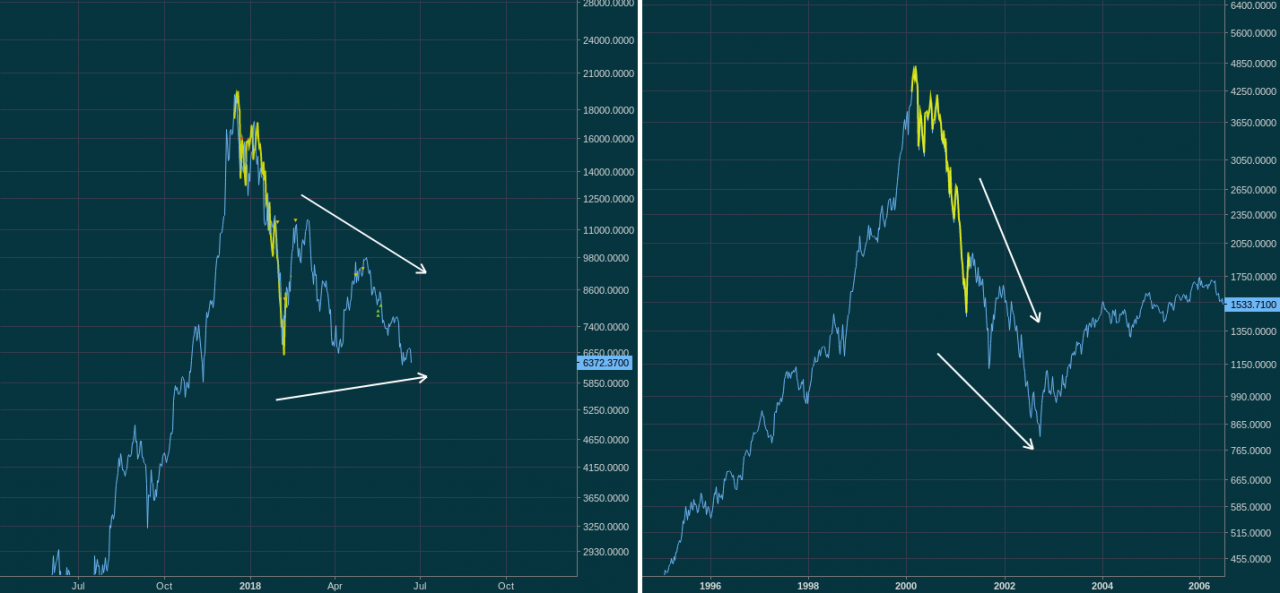
Bitcoin vs. NASDAQ / Dotcom Bubble for TVC:NDX by RealMcafee — TradingView

The future trajectory of Bitcoin and the Nasdaq is complex and uncertain, influenced by a multitude of factors. While precise predictions are impossible, analyzing current trends and potential catalysts can offer insights into plausible scenarios. Understanding the interplay between these two markets, along with the broader technological landscape, is key to formulating potential future outlooks.

Bitcoin Price Forecast Relative to Nasdaq

Bitcoin’s price fluctuations have historically been influenced by the performance of the Nasdaq Composite. While a direct correlation isn’t always evident, periods of market uncertainty often see increased volatility in both assets. Future scenarios could see a stronger correlation if macroeconomic factors or regulatory changes impact both simultaneously.

Technological Advancements

Technological advancements are likely to significantly impact both markets. The increasing integration of blockchain technology into financial systems could lead to increased institutional adoption of cryptocurrencies. On the Nasdaq front, advancements in artificial intelligence and automation could reshape trading strategies and market dynamics. These advancements will influence the future relationship between Bitcoin and the Nasdaq, with potential opportunities and challenges arising from the changing technological landscape.

Future of Cryptocurrency Adoption

Institutional investment and regulatory clarity are crucial for the continued adoption of cryptocurrencies. The movement towards institutional adoption, exemplified by prominent firms investing in crypto, indicates a growing acceptance of digital assets. Successful regulatory frameworks, like those in certain jurisdictions, could pave the way for broader adoption, potentially influencing the future of Bitcoin’s price relative to the Nasdaq.

Intermarket Influence

The relationship between Bitcoin and the Nasdaq will likely be influenced by broader economic factors. A significant downturn in the broader market could negatively affect both assets. Conversely, a period of strong economic growth could positively impact both, leading to a potentially more correlated performance. Future influence will likely depend on how investors perceive the risk-reward profiles of each asset class.

Possible Future Scenarios

Scenario Bitcoin Price vs. Nasdaq Key Factors
Strong Correlation Bitcoin’s price mirrors Nasdaq performance closely. Increased institutional adoption, strong economic growth, and similar risk profiles.
Diversification Bitcoin price shows less dependence on Nasdaq performance. Increased institutional adoption, but with Bitcoin acting as a hedge against traditional markets.
Disparity Bitcoin price shows significant divergence from Nasdaq performance. Regulatory uncertainty, increased volatility, and investors seeking alternative assets.

The table above presents simplified scenarios. A more comprehensive analysis would consider a wider range of variables and their interactions.

Final Review

In conclusion, the Bitcoin price and Nasdaq performance exhibit a complex relationship. While historical correlations offer insights, causation remains elusive. Future trends are uncertain, but this analysis provides a framework for understanding the interplay between these two distinct markets. The volatility of both markets and their reaction to market sentiment and events were key factors throughout the discussion.

Question Bank

What is the correlation coefficient between Bitcoin and Nasdaq?

Correlation coefficients, calculated over various time periods, will be displayed in a table within the analysis. They measure the statistical relationship between the two, ranging from -1 (inverse relationship) to +1 (positive relationship). A coefficient near zero suggests little to no correlation.

How do regulations impact the cryptocurrency market?

Government regulations play a crucial role in shaping the cryptocurrency market. The level of regulation and its specific implementations can impact market stability and investment strategies. This analysis discusses the impact of regulations on both Bitcoin and the broader cryptocurrency landscape.

What are some potential future trends for Bitcoin and Nasdaq?

Future trends are discussed in the analysis, exploring potential influences like technological advancements and broader economic factors. The possible impact of these trends on each market, and the interaction between them, are considered.

Investing online for dummies pdf opens the door to a world of financial opportunities, making it accessible for anyone eager to grow their wealth. Whether you are a complete novice or have dabbled in investing before, this guide breaks down the essentials of online investing, ensuring you can navigate the digital landscape with confidence.

From understanding the basic concepts of online investing to exploring various types of investments and strategies, this resource equips you with the knowledge needed to make informed decisions. With the right tools and strategies, investing online can become a rewarding venture that aligns with your financial goals.

Overview of Online Investing

Online investing refers to the process of buying and selling financial assets through internet-based platforms. This method has gained immense popularity due to its accessibility and convenience, allowing individuals from various backgrounds to participate in the financial markets. In recent years, the evolution of technology has made it easier for everyday investors to manage their investment portfolios without relying heavily on traditional brokerage services.Understanding online investing involves grasping fundamental concepts such as digital trading platforms, market analysis, and asset management.

Investors can engage in various types of investment opportunities, including stocks, bonds, mutual funds, and cryptocurrencies. This flexibility opens doors for individuals who may have previously felt that investing was exclusive to professional traders or those with significant capital.

Advantages and Disadvantages of Online Investing

Online investing carries a set of advantages and disadvantages that every new investor should consider. Awareness of these factors can influence investment decisions and strategies.The benefits of online investing include:

  • Accessibility: Investors can trade anytime and anywhere with an internet connection, providing flexibility in managing investments.
  • Lower Costs: Many online platforms have lower fees compared to traditional brokerages, allowing investors to retain more of their profits.
  • Variety of Options: Investors can access a wide range of investment products, including stocks, ETFs, and cryptocurrencies, all in one place.
  • Real-Time Tracking: Online platforms often provide real-time data and analytics, enabling investors to monitor their portfolios closely.

Despite these advantages, there are notable drawbacks to consider:

  • Market Risks: Online investing does not eliminate risk. Markets can be volatile, and losses can occur rapidly.
  • Overtrading: Easy access to trading can lead to impulsive decisions and overtrading, which can erode capital.
  • Lack of Personal Guidance: Many online investors may miss out on personalized advice that can be beneficial for investment strategies.
  • Security Concerns: Online platforms are susceptible to hacking and cyber threats, which can jeopardize investor information and assets.

Online Investment Platforms for Beginners

A variety of online investment platforms cater to beginners, offering user-friendly interfaces and educational resources. Choosing the right platform is crucial for a smooth investing experience.Some popular online investment platforms include:

  • Robinhood: Known for commission-free trades, Robinhood is popular among new investors looking to dip their toes into the stock market.
  • eToro: This social trading platform allows users to copy the trades of experienced investors, making it an excellent choice for beginners.
  • Fidelity: Fidelity offers a robust suite of investment options, research tools, and educational resources, making it ideal for those wanting a comprehensive platform.
  • Stash: Stash allows users to start investing with as little as $5, providing guidance on portfolio building and investment strategies.

Investors should consider factors such as user experience, educational offerings, and fees when selecting a platform. By choosing a platform that aligns with their goals and learning style, new investors can enhance their online investing experience and set themselves up for future success.

“Investing is not about timing the market, but rather about time in the market.”

Types of Investments

Investing online opens up a world of opportunities for building wealth through various financial instruments. Understanding the different types of investments is crucial for making informed decisions and aligning your portfolio with your financial goals. In this section, we will explore the primary investment options available online, including stocks, bonds, ETFs, and mutual funds, along with their associated risks and potential returns.

Stocks

Stocks represent ownership in a company and are one of the most popular investment options available online. When you purchase a stock, you’re buying a small piece of that company, which entitles you to a share of its profits and voting rights in some cases. The risk level of investing in stocks can vary significantly based on the company’s performance and market conditions.

While stocks offer the potential for high returns, they also come with higher volatility.

Potential Returns

Historically, stocks have averaged a return of about 7% to 10% annually after inflation. However, this can fluctuate widely based on economic conditions and company performance.

“Investing in stocks can yield substantial returns, but it requires a tolerance for risk and market fluctuations.”

Bonds

Bonds are fixed-income investments where you loan money to an entity (government or corporation) in exchange for periodic interest payments and the return of the bond’s face value upon maturity. They are generally considered safer than stocks, making them appealing to conservative investors.The risk level associated with bonds is typically lower, although it varies depending on the issuer’s creditworthiness. Government bonds are generally seen as a safer option compared to corporate bonds.

Potential Returns

While bonds tend to offer lower returns, they usually provide a more predictable income stream, averaging around 2% to 5% annually.

“Bonds can be a reliable income source, especially during turbulent stock markets.”

ETFs (Exchange-Traded Funds)

ETFs are investment funds that hold a collection of assets, such as stocks or bonds, and trade on stock exchanges. They combine the diversification benefits of mutual funds with the trading flexibility of stocks, making them a popular choice for online investors.The risk levels of ETFs vary depending on their underlying assets. For instance, sector-specific ETFs may be more volatile than those tracking broader market indices.

Potential Returns

The returns on ETFs can mirror the performance of the underlying index or sector, which can vary considerably, often aligning with the overall stock market’s performance.

“ETFs offer a diverse way to invest while allowing flexibility in trading.”

Mutual Funds

Mutual funds pool money from multiple investors to buy a diversified portfolio of stocks, bonds, or other securities. They are managed by professionals, making them a suitable option for those who prefer a hands-off approach to investing. The risk associated with mutual funds can be moderate to high, depending on the fund’s investment strategy and asset allocation.

Potential Returns

Returns on mutual funds can range widely based on their investment focus but typically fall between 4% to 8% annually.

“Mutual funds provide professional management and diversification for investors seeking less personal involvement in their investments.”

Getting Started with Online Investing

Embarking on the journey of online investing can be both exciting and daunting. With the right approach and guidance, you can navigate the digital investment landscape with confidence. This section Artikels essential steps and requirements to help you start your investing journey effectively.

Steps to Start Investing Online

Starting with online investing involves several key steps. Following this structured approach ensures that you set a solid foundation for your investment endeavors.

1. Educate Yourself

Familiarize yourself with basic investment concepts and terms. Understanding terms like stocks, bonds, ETFs, and mutual funds is crucial. Consider reading investment blogs, books, or taking online courses to build your knowledge.

2. Set Financial Goals

Define what you want to achieve through investing. Whether it’s saving for retirement, buying a home, or funding education, having clear goals will guide your investment strategy.

3. Choose an Investment Strategy

Decide on the type of investor you want to be—active or passive. Active investors engage frequently in buying and selling, while passive investors typically hold assets long-term to benefit from gradual capital appreciation.

4. Determine Your Risk Tolerance

Assess how much risk you are willing to take. This can depend on factors like your financial condition, investment goals, and how you react to market fluctuations.

5. Create a Budget for Investing

Identify how much money you can allocate to investments without affecting your essential expenses. It’s important to only invest what you can afford to lose.

Checklist for Opening an Online Investment Account

Before you can start investing, you’ll need to open an online investment account. Here’s a useful checklist to ensure you have everything in place.Consider the following requirements:

Personal Identification

A government-issued ID (like a driver’s license or passport) to verify your identity.

Social Security Number

Necessary for tax purposes in the United States.

Bank Account Information

Details for transferring funds between your bank and your investment account.

Investment Goals

A clear Artikel of your objectives which may be requested by the broker.

Income Information

Providing your income can help brokers assess your suitability for certain investments.Utilizing this checklist helps streamline the process, ensuring you have all necessary documents ready when setting up your account.

Researching and Choosing the Right Broker for Beginners

Selecting the right broker is a pivotal step in your online investing journey. With numerous options available, conducting thorough research is essential.Begin by considering the following factors:

Regulation and Safety

Ensure the broker is regulated by a reputable authority such as the SEC in the United States. This regulation adds a layer of security to your investments.

Fees and Commissions

Different brokers have varying fee structures. Look for low commissions and account maintenance fees, especially for beginners who are just starting out.

User-Friendly Platform

A well-designed trading platform that is easy to navigate can enhance your investing experience. Look for brokers that offer demo accounts to practice trading without financial risk.

Educational Resources

Choose brokers that provide comprehensive educational material. Resources such as webinars, articles, and tutorials can significantly aid your learning.

Customer Support

Reliable customer service is crucial, especially when you’re new to investing. Look for brokers with accessible support through various channels.

Investment Options

Ensure the broker offers the types of investments that align with your goals—be it stocks, ETFs, or other asset classes.Each of these factors plays a crucial role in your overall investing experience, so taking the time to choose wisely will set you on the path to successful online investing.

Investment Strategies for Beginners

Understanding investment strategies is crucial for beginners aiming to grow their financial portfolio. By adopting the right strategies, new investors can navigate the complexities of the market and make informed decisions. The following strategies have proven effective for novices, providing a solid foundation for future investing success.

Dollar-Cost Averaging

Dollar-cost averaging is an investment technique where an investor consistently invests a fixed amount of money into a specific investment at regular intervals, regardless of the price. This approach helps mitigate the impact of volatility and reduces the risk of making poor investment decisions based on short-term market fluctuations.To implement dollar-cost averaging, follow these steps:

1. Choose an Investment

Select a specific stock or mutual fund.

2. Set an Investment Amount

Decide on a fixed dollar amount to invest, e.g., $

100. 3. Determine a Schedule

Invest this amount consistently, such as monthly or quarterly.

4. Continue Investing Regardless of Price

Whether the stock price is high or low, stick to your schedule.For example, if you invest $100 in a mutual fund at the beginning of each month, you might buy more shares when prices are lower and fewer shares when prices are high. Over time, this averages out your purchase price and can result in a more favorable outcome.

Value Investing

Value investing is a strategy that involves picking stocks that appear to be undervalued in the market. Investors using this strategy look for stocks that are priced lower than their intrinsic value, based on financial analysis. This often includes examining a company’s financial health, earnings, and potential for future growth.To implement value investing, consider the following steps:

1. Research Companies

Look for companies with strong fundamentals but low stock prices.

2. Analyze Financial Reports

Review income statements, balance sheets, and cash flow statements to assess the company’s financial health.

3. Determine Intrinsic Value

Use valuation methods to estimate the stock’s intrinsic value.

4. Invest

Purchase shares when the market price is significantly below the intrinsic value.A classic example of value investing is Warren Buffett’s investment in Coca-Cola in the late 1980s. At that time, the stock was undervalued based on its brand strength and market position. Buffett’s investment paid off handsomely as Coca-Cola’s stock price increased significantly in the following years.

Comparison of Short-Term vs Long-Term Investment Strategies

The choice between short-term and long-term investment strategies largely depends on an individual’s financial goals, risk tolerance, and market outlook. Below is a comparison table that highlights the key differences between these two approaches.

Criteria Short-Term Investment Strategies Long-Term Investment Strategies
Time Horizon Less than 1 year More than 1 year
Goal Quick gains through price fluctuations Wealth accumulation and compounding growth
Risk Level Higher risk due to market volatility Generally lower risk; benefits from market trends
Typical Investments Stocks, options, day trading Stocks, bonds, mutual funds, ETFs
Management Active trading required Less active, often buy and hold

Risk Management in Online Investing

Investing online can be an exciting venture, but it also comes with its fair share of risks. Understanding how to manage these risks is essential for any investor looking to secure their financial future. Effective risk management strategies not only protect your investments but also help you make informed decisions that align with your financial goals.

Diversifying Investments

One of the most effective methods for managing risk is through diversification. By spreading your investments across different asset classes, you reduce the impact of any single investment’s poor performance on your overall portfolio. Diversification can be achieved through various means, including:

  • Investing in a mix of stocks, bonds, and real estate.
  • Including different sectors such as technology, healthcare, and consumer goods.
  • Considering international investments to tap into growth in other economies.

This strategy minimizes your exposure to risk because losses in one area may be offset by gains in another, leading to a more stable investment experience.

Assessing Personal Risk Tolerance

Understanding your risk tolerance is crucial to developing a sound investment strategy. Risk tolerance refers to the level of variability in investment returns that you are willing to withstand. To accurately assess your personal risk tolerance, consider the following factors:

  • Investment Goals: Define what you want to achieve, whether it’s saving for retirement, buying a home, or building wealth.
  • Time Horizon: The length of time you plan to invest before needing access to your funds can influence how much risk you can take on.
  • Financial Situation: Evaluate your current financial status, including income, expenses, and other investments.

By taking these factors into account, you can better determine an investment strategy that aligns with your comfort level and financial objectives.

Role of Stop-Loss Orders

Stop-loss orders are critical tools for protecting investments and managing potential losses. A stop-loss order is placed with a broker to sell a security when it reaches a certain price. This mechanism serves to limit losses and safeguard capital. For instance, if you purchase a stock at $50, you might set a stop-loss order at $45. If the stock price falls to $45, your broker will automatically sell the shares, thereby preventing further losses.

The use of stop-loss orders can help you maintain discipline in your investment strategy and avoid emotional decisions during market volatility.

“Utilizing stop-loss orders allows for a more structured approach to managing risk, ensuring that financial setbacks are kept within predefined limits.”

Understanding these strategies can help you navigate the world of online investing with greater confidence, ultimately leading to better investment outcomes.

Tools and Resources for Online Investors

In the world of online investing, having the right tools and resources can make a significant difference, especially for beginners. These tools aid in tracking investments, making informed decisions, and staying updated with market trends. Understanding what resources are available allows investors to navigate the complex landscape of financial markets with greater confidence and ease.A variety of tools exist that cater to different aspects of online investing, from portfolio management to real-time market analysis.

Below is a collection of essential tools and websites that any aspiring online investor might find beneficial.

Essential Tools and Resources

Investors should leverage a range of tools to enhance their investing experience. The following resources are widely used by both novice and seasoned investors:

  • Brokerage Platforms: Most investors start with a brokerage account. Platforms like Robinhood, E*TRADE, and TD Ameritrade offer user-friendly interfaces and robust trading tools.
  • Investment Tracking Apps: Apps like Personal Capital or Mint help investors track portfolios, budget, and expenses in one place.
  • Stock Screeners: Websites such as Finviz and Yahoo Finance allow investors to filter stocks based on various criteria, helping identify potential investments.
  • Financial News Websites: Resources like Bloomberg, CNBC, and Reuters deliver up-to-date news that can impact market movements.
  • Investment Research Tools: Morningstar and Zacks offer in-depth analysis and ratings on stocks and mutual funds, aiding in informed decision-making.

Understanding how to use these tools effectively can lead to more strategic investment decisions.

Websites and Apps for Tracking Investments

Tracking investments is crucial for monitoring performance and making timely decisions. The following platforms are designed to assist investors in this regard:

  • Yahoo Finance: A comprehensive platform where investors can create customizable watchlists, access historical data, and read expert analyses.
  • Google Finance: Ideal for quick checks on stock performance and market news, providing a simple interface for immediate insights.
  • Seeking Alpha: Offers personalized news feeds and a community of investors sharing their analyses and insights, which can provide different perspectives.
  • Stocktwits: A social media platform focused on stock trading where users can share ideas and discuss current market trends.

Utilizing these websites allows investors to stay informed and engaged with their investments.

Using Financial News and Analysis Websites

Effectively using financial news and analysis websites is crucial for staying updated on market trends and economic indicators. Here are some tips on leveraging these resources:

  • Set Alerts: Most financial websites allow users to set alerts for specific stocks or market events. This ensures that you receive timely updates relevant to your investments.
  • Follow Analysts: Many financial news websites feature expert analyses. Following reputable analysts can provide insights that inform investment strategies.
  • Engage with Market Commentary: Many platforms have sections dedicated to market commentary. Engaging with these insights can offer valuable context to market movements.
  • Utilize Economic Calendars: These calendars highlight important economic events and data releases that could influence market trends.

By familiarizing themselves with these tools and resources, beginner investors can better navigate the online investing landscape, making informed decisions that align with their financial goals.

Common Mistakes to Avoid

Investing online can be a rewarding venture, but it comes with its own set of challenges. New investors often fall into traps that can lead to significant losses or missed opportunities. Awareness of these common pitfalls is essential for any beginner looking to navigate the online investing landscape successfully.Emotional discipline is crucial in making sound investment decisions. When investors allow their emotions to dictate their actions, they may make irrational decisions that can jeopardize their financial goals.

Understanding how to manage emotions and maintain a clear perspective can help in avoiding costly mistakes.

Common Pitfalls for New Investors

Identifying and avoiding common mistakes can make a significant difference in an investor’s journey. Below are some prevalent pitfalls that new investors often encounter:

  • Overtrading: This occurs when investors buy and sell frequently, often in reaction to short-term market movements. This can lead to increased transaction fees and a potential decrease in overall returns. A disciplined approach with a long-term perspective can help mitigate this mistake.
  • Panic Selling: Investors may succumb to fear during market downturns, leading them to sell off assets impulsively. This often results in locking in losses rather than holding through volatility. A well-thought-out investment plan with a focus on long-term goals can aid in resisting the urge to sell during turbulent times.
  • Neglecting Research: Some new investors skip due diligence and invest in assets based on tips or hype. This can lead to uninformed decisions. Taking the time to research companies and understand market fundamentals is essential to making informed choices.
  • Ignoring Fees and Taxes: Many novice investors overlook the impact of trading fees and tax implications on their returns. Being aware of these factors and choosing low-cost investment options can help preserve profits.

The Importance of Emotional Discipline

Emotional discipline is the ability to maintain a rational mindset in the face of market fluctuations. Keeping emotions in check allows investors to adhere to their strategies and avoid impulsive decisions.

“Successful investing requires emotional discipline and the courage to stick to a strategy amidst market noise.”

Traders who can manage their emotions are more likely to recover from losses and capitalize on market opportunities. For instance, instead of selling during a market dip, a disciplined investor may see it as a buying opportunity, potentially leading to greater returns when the market rebounds.

Avoiding Overtrading and Panic Selling

To mitigate the risks associated with overtrading and panic selling, investors should establish a clear investment plan and stick to it. Setting specific goals, such as target prices or timeframes, can help maintain focus and prevent reactionary decisions. Investors can also benefit from the following strategies:

  • Establishing a long-term investment horizon to resist the temptation of short-term trading.
  • Setting stop-loss orders to automatically limit losses without the need for emotional decision-making.
  • Reviewing investments periodically but avoiding constant monitoring that may trigger emotional responses.

Tax Implications of Online Investing

Investing online comes with various tax responsibilities that every investor should be aware of to ensure compliance and maximize their financial outcomes. Understanding how taxes apply to your investments can significantly affect your overall returns and investment strategies. This section delves into the tax implications associated with online investing, including reporting requirements and strategies for tax efficiency.

Tax Responsibilities Associated with Online Investments

Online investors are subject to taxation on capital gains, dividends, and interest income. It’s essential to recognize the following key points regarding tax responsibilities:

  • Capital Gains Tax: When you sell an investment for more than you paid for it, the profit is considered a capital gain and is subject to tax. The rate depends on how long you held the investment—investments held for over a year qualify for long-term capital gains tax rates, which are typically lower than short-term rates.
  • Dividends Tax: Income earned from dividends is also taxable. Qualified dividends are taxed at the long-term capital gains rate, while non-qualified dividends are taxed at ordinary income rates. Knowing the classification of your dividends is crucial for tax purposes.
  • Interest Income: Interest earned on bonds, savings accounts, and other fixed-income investments is taxed as ordinary income. This tax is applied regardless of the duration for which the investment was held.

Reporting Gains and Losses for Tax Purposes

Properly reporting your gains and losses is vital to fulfill your tax obligations. Investors must track their transactions to prepare accurate tax returns. Here are the steps involved in reporting:

  • Form 1099: Brokerage firms provide Form 1099, which summarizes your gains, losses, and income from investments. This form is crucial for preparing your tax return.
  • Schedule D: You’ll report your capital gains and losses on Schedule D of your tax return. This form helps you calculate your overall capital gain or loss.
  • Offsetting Gains with Losses: If you have realized losses, you can use them to offset realized gains, minimizing your taxable income. This strategy is known as tax-loss harvesting.

Tax-Efficient Investment Strategies

To optimize your investment returns while minimizing tax liabilities, consider the following tax-efficient strategies:

  • Utilizing Tax-Advantaged Accounts: Investing through accounts such as IRAs and 401(k)s can defer taxes on gains until withdrawal, allowing your investments to grow tax-free for a longer period.
  • Holding Investments Long-Term: By holding investments for over a year, you qualify for lower long-term capital gains rates, making it more tax-efficient than frequent trading.
  • Investing in Tax-Efficient Funds: Consider index funds or ETFs, which tend to generate fewer capital gains distributions compared to actively managed funds, thus lowering your taxable income.

“Understanding tax implications of your investments can help you retain more of your returns and make informed decisions.”

Continuing Education in Investing

As the financial landscape evolves, so do the strategies and tools available for investors. Ongoing education is vital for anyone looking to make informed decisions in online investing. By continually expanding your knowledge and refining your skills, you can better navigate market fluctuations, identify opportunities, and manage risks. This commitment to learning not only enhances your investment acumen but also empowers you to set and achieve your financial goals.Investing is not a one-time endeavor; it’s a journey that often requires adaptation and new strategies.

To excel, it’s essential to engage with a variety of educational resources that can provide valuable insights into market trends and investment techniques. Consider integrating the following resources into your learning plan:

Educational Resources for Investors

A myriad of resources is available for those committed to investing education. Each resource offers unique perspectives and knowledge that can enhance your understanding of the market.

  • Books: There are countless books written by investment experts. Titles like “The Intelligent Investor” by Benjamin Graham and “A Random Walk Down Wall Street” by Burton G. Malkiel offer foundational knowledge and insights into sound investing principles.
  • Online Courses: Platforms such as Coursera and Udemy offer courses on various investing topics, from stock market basics to advanced trading strategies. These courses are often created by industry professionals and can provide hands-on learning experiences.
  • Podcasts: Engaging podcasts such as “Invest Like the Best” and “The Motley Fool Investing Podcast” can keep you updated on market trends and provide expert interviews, making them a convenient way to learn while on the go.
  • Webinars and Workshops: Participate in live webinars and workshops held by financial institutions and investment firms. These events often feature expert speakers and offer opportunities for Q&A sessions to deepen your understanding.

The importance of setting investment goals cannot be overstated, as they provide clear direction and purpose. A well-defined set of goals helps you refine your strategies over time, ensuring that your investments align with your financial aspirations.

“Education is the foundation upon which you build your investing success.”

Creating a structured plan for your continuous education involves identifying your learning objectives, committing to a study schedule, and regularly reviewing your progress. Set aside dedicated time each week to engage with new material, whether it’s reading a book, taking a course, or listening to a podcast. Regular reflection on what you have learned and how you can apply it will help you adjust your investment strategies as needed, making you a more adept investor over time.

Ending Remarks

In summary, investing online for dummies pdf serves as a comprehensive primer for anyone looking to dip their toes into the investment waters. By grasping the fundamentals, avoiding common pitfalls, and continuously educating yourself, you can establish a solid investment foundation that paves the way for financial success.

Commonly Asked Questions

What is online investing?

Online investing involves buying and selling financial securities through internet-based platforms, making it easier for individuals to manage their investments from anywhere.

Is online investing safe?

While online investing carries risks, choosing reputable platforms and implementing security measures can help protect your investments and personal information.

Do I need a lot of money to start investing online?

No, many online investment platforms allow you to start with a small amount, making it easier for beginners to get started without a significant financial commitment.

What types of accounts can I open for online investing?

You can open various accounts, including brokerage accounts, retirement accounts like IRAs, and robo-advisor accounts, depending on your investment goals.

How can I learn more about investing online?

There are numerous resources available, including books, online courses, webinars, and investment forums, to help you deepen your understanding of online investing.