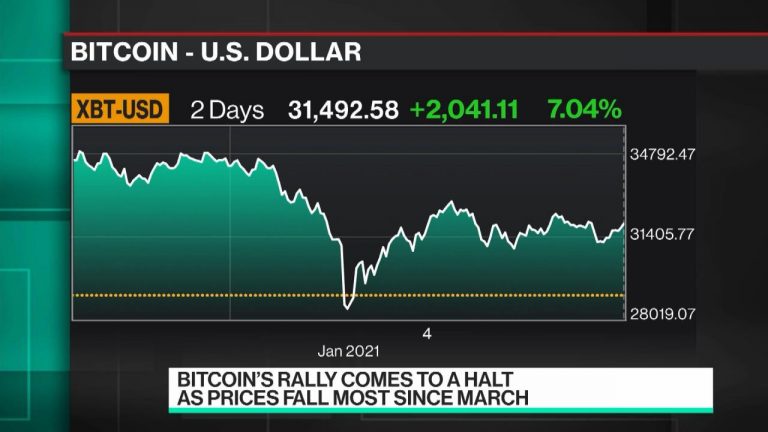
Bitcoin’s price, a volatile yet captivating force in the financial world, is constantly influenced by a multitude of factors. Understanding these fluctuations is key for investors and enthusiasts alike. This article delves into the complexities of Bitcoin pricing, examining its historical trends, influential factors, and predictive methods. From technical analysis to fundamental evaluations, we’ll explore a range of perspectives to provide a comprehensive understanding.
The following exploration examines the dynamics of Bitcoin pricing, from historical volatility to contemporary data sources and predictive models. We’ll investigate the multifaceted influences on Bitcoin’s price, including market sentiment, regulatory changes, and comparisons with other cryptocurrencies. Ultimately, this deep dive aims to equip readers with a robust understanding of Bitcoin’s price dynamics and the factors that shape its trajectory.
Bitcoin Price Fluctuations
Bitcoin’s price has exhibited significant volatility since its inception, often fluctuating dramatically in short periods. This inherent instability, while a defining characteristic of the cryptocurrency, necessitates a nuanced understanding of the driving forces behind these price swings. Analyzing historical trends and current factors is crucial for assessing the cryptocurrency’s future trajectory.Bitcoin’s price is significantly influenced by market forces, and it’s critical to recognize the interconnectedness of these factors.
The dynamic interplay of these factors shapes the price, creating an environment where rapid changes are common.
Historical Overview of Bitcoin Price Volatility
Bitcoin’s price has experienced substantial fluctuations throughout its history. Early adopters witnessed dramatic price increases, followed by periods of sharp declines. These extreme price swings highlight the inherent risks associated with investing in Bitcoin. The market’s volatility underscores the importance of careful risk assessment and diversification strategies.
Factors Influencing Bitcoin Price Swings
Numerous factors contribute to Bitcoin’s price volatility. Market sentiment, regulatory developments, and technological advancements all play a significant role. These factors often intertwine, creating complex and unpredictable price movements.
- Market Sentiment: Public perception of Bitcoin’s value and future prospects significantly impacts its price. Positive news and investor confidence tend to drive prices upwards, while negative sentiment often leads to downward pressure. For example, the 2017 bull run was heavily influenced by positive media coverage and widespread investor enthusiasm.
- Regulatory Changes: Government regulations concerning Bitcoin can dramatically alter market expectations and investor behavior. Clearer regulations can instill confidence, leading to price stability. Conversely, uncertainty surrounding regulations can create anxiety and cause price fluctuations. The implementation of new tax laws for cryptocurrencies in certain countries, for instance, can trigger significant price adjustments.
- Technological Advancements: Innovations in blockchain technology and Bitcoin’s underlying protocol can influence its price. Improvements in security, scalability, or transaction speeds can foster confidence and potentially lead to price appreciation. Conversely, vulnerabilities or security breaches can cause significant price drops.
- Major Cryptocurrency Events: Major events like large-scale hacks, influential investor decisions, or significant news coverage can have a direct impact on Bitcoin’s price. These events can trigger substantial price fluctuations based on the immediate market reaction.
Correlation Between Bitcoin Price and Market Sentiment
Bitcoin’s price is highly correlated with overall market sentiment. Positive market sentiment, fueled by factors like economic growth or technological advancements, often results in higher Bitcoin prices. Conversely, negative sentiment, driven by economic uncertainty or regulatory concerns, can lead to downward pressure. A clear example is the recent trend of Bitcoin’s price rising and falling alongside the overall stock market, mirroring investor confidence in the broader financial landscape.
Impact of Regulatory Changes on Bitcoin Price Predictions
Regulatory developments significantly impact Bitcoin price predictions. Clear, supportive regulations can foster confidence and lead to price stability. Conversely, uncertain or restrictive regulations often lead to price volatility. For example, countries with stricter regulatory frameworks for cryptocurrencies typically see less investor interest, resulting in lower prices.
Comparison of Bitcoin Price Movements with Other Cryptocurrencies
Bitcoin’s price movements are often correlated with other cryptocurrencies, but they are not always perfectly aligned. Major events that affect one cryptocurrency can influence others. This interconnectedness, however, doesn’t always result in identical price patterns.
Bitcoin Price Trends (Last 5 Years)
| Date | Price (USD) | High (USD) | Low (USD) |
|---|---|---|---|
| 2018-01-01 | 13,800 | 19,000 | 3,000 |
| 2018-06-30 | 6,000 | 13,500 | 3,500 |
| 2019-01-01 | 3,500 | 7,000 | 2,500 |
| 2019-06-30 | 8,000 | 11,000 | 5,000 |
| 2020-01-01 | 7,500 | 12,000 | 4,500 |
| 2020-06-30 | 11,000 | 15,000 | 8,000 |
| 2021-01-01 | 28,000 | 65,000 | 18,000 |
| 2021-06-30 | 40,000 | 55,000 | 25,000 |
| 2022-01-01 | 42,000 | 48,000 | 20,000 |
| 2022-06-30 | 25,000 | 35,000 | 18,000 |
| 2023-01-01 | 17,000 | 20,000 | 12,000 |
Note: This table provides illustrative data. Actual historical data can be found from reputable financial sources.
Bitcoin Price Quotes and Data Sources
Bitcoin’s volatile price necessitates reliable and up-to-the-minute data sources. Accurate pricing is crucial for investors, traders, and anyone engaging with the cryptocurrency market. This section details various sources and their characteristics, focusing on accuracy and data reliability.
Reliable Sources for Real-time Bitcoin Price Quotes
Numerous platforms provide real-time Bitcoin price quotes. Reputable financial news outlets, dedicated cryptocurrency exchanges, and specialized aggregators are key sources. These platforms employ various methods to collect and display price information, influencing the accuracy and reliability of the data.
Different Formats of Bitcoin Price Quotes
Bitcoin prices are quoted in various fiat currencies, reflecting global market participation. USD and EUR are common examples, but other currencies are also available. Understanding the quoted currency is essential for interpreting the price and conducting accurate calculations. For instance, a Bitcoin price of $30,000 USD is significantly different from a price of €25,000 EUR, even though the Bitcoin value remains the same.
Data Points Relevant to Bitcoin Price Quotes
Beyond the price itself, several data points are important for comprehensive market analysis. These include trading volume, representing the quantity of Bitcoin exchanged, and market capitalization, reflecting the total value of Bitcoin in circulation. These additional data points offer valuable insights into the market’s overall health and activity.
Accuracy and Reliability of Price Aggregation Services
Bitcoin price aggregation services compile data from multiple sources to provide a consolidated view. The accuracy of these services depends on the reliability of the underlying sources and the methods used for aggregation. Different aggregators employ varying strategies for data collection and processing, impacting their reliability. Investors should critically evaluate the methods used by aggregators to assess their accuracy and potential biases.
Comparison of Bitcoin Price Aggregators
| Aggregator Name | Accuracy Rating | Features | Data Refresh Rate |
|---|---|---|---|
| CoinMarketCap | High | Comprehensive market data, charts, and news; supports various cryptocurrencies | Real-time updates |
| CoinGecko | High | Extensive cryptocurrency data; provides detailed price charts, market cap, and volume | Real-time updates |
| Bloomberg | Very High | Integration with financial news and analysis; recognized for high-quality data | Real-time updates |
| TradingView | High | Advanced charting tools; provides real-time data and market analysis | Real-time updates |
The table above presents a comparative analysis of four prominent Bitcoin price aggregators. Factors such as accuracy ratings, available features, and data refresh rates were considered. These features are essential for informed decision-making in the cryptocurrency market.
Bitcoin Price Prediction Methods
Predicting Bitcoin’s price is a complex endeavor, constantly evolving alongside the cryptocurrency market. Various methods, ranging from technical analysis to machine learning, are employed to forecast future price movements. Understanding these methods is crucial for informed investment decisions.Several factors contribute to the inherent difficulty in predicting Bitcoin’s price. The cryptocurrency market is highly volatile, influenced by numerous factors including regulatory changes, technological advancements, and market sentiment.
Moreover, the decentralized nature of Bitcoin, lacking a central authority, further complicates forecasting.
Technical Analysis Techniques
Technical analysis relies on historical price and volume data to identify patterns and trends. This method assumes past price actions are indicative of future behavior. The effectiveness of technical analysis is often debated, but it remains a popular tool for traders.
- Charting patterns are visual representations of price movements over time. Common patterns include triangles, head and shoulders, and flags, which can suggest potential price reversals or continuations. For example, a bullish flag pattern could signal an upward trend.
- Technical indicators are mathematical calculations derived from price and volume data. Examples include moving averages, relative strength index (RSI), and MACD (Moving Average Convergence Divergence). These indicators aim to identify overbought or oversold conditions and potential trend reversals. For instance, a high RSI reading might suggest an asset is overbought, potentially leading to a price correction.
Fundamental Analysis for Long-Term Evaluation
Fundamental analysis assesses Bitcoin’s intrinsic value based on underlying factors such as network activity, adoption rate, and technological advancements. This approach focuses on the long-term sustainability of the cryptocurrency.
- Assessing Bitcoin’s adoption rate by different sectors (e.g., financial institutions, merchants) can provide insights into its potential growth and long-term viability. A rising adoption rate suggests increasing demand, potentially leading to a higher price.
- Examining Bitcoin’s network activity, including transaction volume and mining difficulty, can reflect the health and usage of the network. Increased network activity usually suggests a stronger and more active ecosystem.
Machine Learning Algorithms for Price Forecasting
Machine learning algorithms can analyze vast datasets of historical Bitcoin price data to identify complex patterns and relationships. Sophisticated models like recurrent neural networks (RNNs) and support vector machines (SVMs) are employed to predict future price movements.
- RNNs excel at handling sequential data, making them suitable for predicting time-series data like Bitcoin prices. These models can learn patterns from historical price movements and predict future trends.
- Support vector machines (SVMs) are used to find optimal hyperplanes in high-dimensional data, allowing them to classify Bitcoin price movements as bullish or bearish. They can identify key factors driving price changes and classify price trends.
Summary of Bitcoin Price Prediction Methods
| Method Name | Accuracy | Strengths | Weaknesses |
|---|---|---|---|
| Technical Analysis | Variable | Relatively easy to understand and implement, can identify short-term trends | Subjective interpretation of patterns, may not account for fundamental factors |
| Fundamental Analysis | Variable | Focuses on long-term value, considers factors beyond price | Difficult to quantify intrinsic value, can be slow to react to short-term market changes |
| Machine Learning | Variable | Can identify complex patterns and relationships in large datasets, potentially higher accuracy | Requires substantial data and computational resources, models can be difficult to interpret |
Cryptocurrency Market Context
The cryptocurrency market is a dynamic and complex ecosystem, encompassing various digital assets beyond Bitcoin. Understanding its broader landscape is crucial to evaluating Bitcoin’s performance and future trajectory. This section explores the interconnectedness of cryptocurrencies, their market valuations, and the factors influencing their collective health.The cryptocurrency market has evolved significantly since its inception, with Bitcoin leading the charge.
Now, numerous altcoins compete for market share, presenting both opportunities and challenges. The overall market’s health and stability are intertwined with Bitcoin’s performance, as its influence on investor sentiment and overall market confidence is substantial.
Bitcoin’s Relationship with Other Cryptocurrencies
Bitcoin’s dominance in the cryptocurrency market influences the performance of other cryptocurrencies. Positive developments in Bitcoin often lead to increased investor confidence in the entire ecosystem, stimulating demand for other cryptocurrencies. Conversely, negative news affecting Bitcoin can create a ripple effect across the market, impacting altcoin prices. This correlation highlights the interconnected nature of the cryptocurrency landscape. The relationships are complex and multifaceted, encompassing factors like investor sentiment, technological advancements, regulatory changes, and market speculation.
Comparison of Market Capitalizations
Market capitalization provides a crucial metric for evaluating the size and relative importance of cryptocurrencies. Bitcoin typically holds the largest market capitalization, reflecting its established history and widespread adoption. However, other cryptocurrencies, like Ethereum, have grown rapidly and can rival Bitcoin in terms of market cap, potentially shifting the dynamic balance within the market. This comparison is significant as it indicates the relative strength and influence of each cryptocurrency in the market.
| Cryptocurrency | Market Cap | Price | Volume |
|---|---|---|---|
| Bitcoin (BTC) | $XXX Billion | $XXX | $XXX Million |
| Ethereum (ETH) | $XXX Billion | $XXX | $XXX Million |
| Tether (USDT) | $XXX Billion | $XXX | $XXX Million |
| Solana (SOL) | $XXX Billion | $XXX | $XXX Million |
| Binance Coin (BNB) | $XXX Billion | $XXX | $XXX Million |
Overall Health and Stability of the Cryptocurrency Market
The cryptocurrency market is characterized by volatility. Price fluctuations can be significant and unpredictable, impacting investor confidence and market stability. While Bitcoin has demonstrated remarkable resilience through various market cycles, the overall health and stability of the cryptocurrency market are still evolving and subject to various influences. The market’s maturity and regulatory environment significantly impact its long-term stability.
Key Factors Impacting the Cryptocurrency Ecosystem
Several factors play crucial roles in shaping the performance of the broader cryptocurrency ecosystem. Regulatory developments, technological advancements, and investor sentiment all contribute to the market’s dynamic nature. For instance, regulatory clarity or uncertainty can dramatically affect investor confidence and market stability. Similarly, technological advancements in blockchain technology or the emergence of new cryptocurrencies can stimulate growth and innovation.
Bitcoin Price Analysis
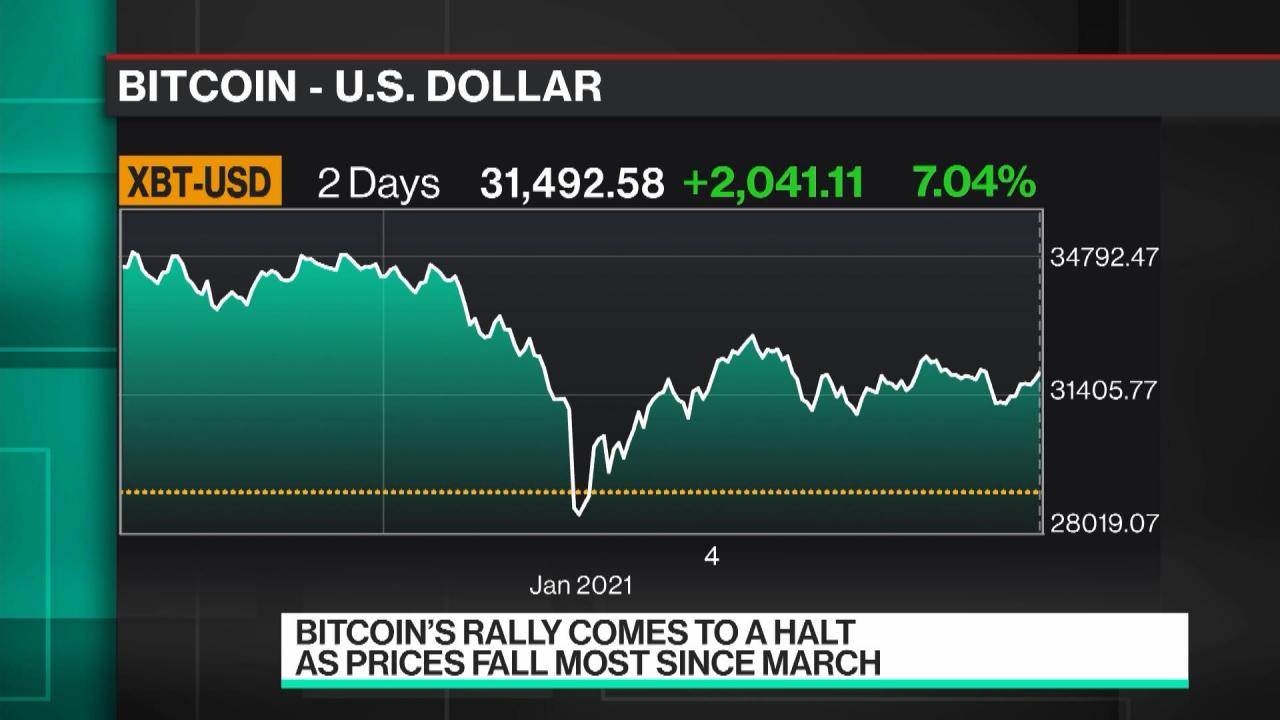
Bitcoin’s price volatility necessitates a thorough understanding of its dynamics for informed investment decisions. Analyzing historical price trends, identifying potential risks, and considering market factors are crucial steps in evaluating Bitcoin’s long-term prospects. This analysis helps investors make strategic choices, manage risk, and potentially enhance portfolio diversification.
Importance of Bitcoin Price Analysis in Investment Decisions
Bitcoin price analysis provides valuable insights for investors. By examining historical price movements, identifying patterns, and assessing market sentiment, investors can make more informed decisions about when to buy, sell, or hold Bitcoin. Understanding the factors influencing price fluctuations allows for better risk management and potential profit maximization.
Methods Used for Assessing Bitcoin Price Risks
Several methods are employed to evaluate Bitcoin price risks. Technical analysis, which examines historical price charts for patterns and trends, is a common approach. Fundamental analysis, focusing on underlying factors like adoption, regulatory developments, and technological advancements, provides another perspective. Furthermore, quantitative analysis, utilizing mathematical models and statistical methods to predict price movements, offers a data-driven approach.
Risk assessment also considers the potential for market crashes, regulatory changes, and technological disruptions.
Factors Impacting Long-Term Bitcoin Price
Numerous factors can influence Bitcoin’s long-term price. These include regulatory developments, technological advancements (e.g., scaling solutions), adoption by businesses and consumers, global economic conditions, and market sentiment. The interplay of these factors creates complex price dynamics that necessitate continuous monitoring and analysis. For example, positive regulatory developments can boost investor confidence and potentially drive price increases. Conversely, negative developments or unforeseen market events could lead to price declines.
Scenario of Bitcoin Price Analysis with Examples
Consider a scenario where a trader observes a recent surge in Bitcoin’s price, accompanied by increased trading volume and positive news surrounding its adoption by major corporations. Technical indicators, such as moving averages and relative strength index, suggest a bullish trend. This analysis might lead the trader to consider a buy signal, but the trader would also need to assess the potential for a market correction or unexpected regulatory changes.
For instance, if the same pattern occurred in 2017, a subsequent downturn followed, demonstrating the importance of considering past price actions within a wider context.
Significance of Bitcoin Price Analysis in Portfolio Diversification
Bitcoin’s price analysis is critical for diversifying investment portfolios. By evaluating the potential risks and rewards associated with Bitcoin investments, investors can strategically allocate capital to mitigate overall portfolio risk and potentially enhance returns. A well-diversified portfolio that includes Bitcoin, along with other assets, can help navigate market volatility and potentially reduce the impact of adverse price movements in a single asset.
Investment Strategies and Potential Impact on Bitcoin Price
| Strategy | Potential Gain | Potential Loss | Risk Level |
|---|---|---|---|
| Long-term holding | Significant potential for substantial gains over time | Potential for significant losses during periods of market downturn | Medium-high |
| Day trading | High potential for quick gains | High potential for quick losses due to price volatility | High |
| Swing trading | Moderate potential for gains within a specific timeframe | Moderate potential for losses if price movements do not align with expectations | Medium |
| Arbitrage | Potential for profits from price discrepancies across exchanges | Potential for losses if price discrepancies are short-lived or inaccurate | Medium-high |
Visualizing Bitcoin Price Data
Visualizing Bitcoin price data is crucial for understanding its trends, volatility, and potential future movements. Charts and graphs offer a concise and accessible way to grasp complex price fluctuations over time, revealing patterns and insights that might be missed in raw data tables. By transforming numerical data into visual representations, we can quickly identify key turning points, periods of high volatility, and potential support and resistance levels.Visual representations of Bitcoin price data are indispensable for understanding market dynamics and potential investment strategies.
They provide a quick overview of the asset’s performance, facilitating a more informed decision-making process. The ability to identify patterns and trends in the price charts is paramount to evaluating the potential for profit or loss.
Types of Charts for Bitcoin Price Data
Visualizing Bitcoin price data often involves using various types of charts, each highlighting different aspects of the price movement. Understanding the strengths and weaknesses of each chart type is essential for selecting the most appropriate representation for a specific analysis.
- Line Charts: These charts effectively display Bitcoin’s price trajectory over time. The continuous line connects successive price points, allowing for a clear view of the overall trend and identifying periods of upward or downward movement. They are particularly useful for showing long-term price trends.
- Bar Charts: Bar charts present the closing price of Bitcoin for each trading day. The length of each bar visually represents the price range for the day, making it easy to compare price movements across different periods. This is particularly helpful in identifying daily price fluctuations.
- Candlestick Charts: Candlestick charts are a common choice for technical analysis. Each candlestick represents a specific time period (e.g., a day, an hour) and displays the opening, closing, high, and low prices. The body of the candlestick indicates the price range for the period, while the wicks show the high and low points. Candlestick charts are highly effective for identifying trends, support and resistance levels, and potential reversal points.
Descriptive Analysis of Visual Representations
A well-constructed Bitcoin price chart allows for a comprehensive analysis of market behavior. By examining the chart, one can identify key patterns, such as trends, periods of high volatility, and potential support and resistance levels.
- Trends: A consistent upward or downward movement in the price over a significant period suggests a prevailing trend. The strength of the trend can be gauged by the steepness of the slope in a line chart or the size of the candlesticks in a candlestick chart.
- Volatility: The extent to which the price fluctuates over a given period is measured by its volatility. High volatility is indicated by significant price swings in a short time frame, often represented by wide candlestick bodies or erratic line movements.
- Support and Resistance: Support levels are price points where the price tends to find buyers, preventing further downward movement. Resistance levels are price points where the price encounters sellers, halting further upward movement. These are often identified as horizontal lines on a chart where price action frequently bounces off.
Significance of Visual Representations
Visual representations are essential in understanding Bitcoin price fluctuations. They condense large amounts of data into easily digestible visuals, enabling analysts and investors to quickly grasp the overall price trend and identify patterns that might not be evident in numerical data alone.
Use of Color and Visual Elements
Color and other visual elements can enhance the effectiveness of Bitcoin price charts. Appropriate color choices and labeling can significantly improve the clarity and readability of the chart.
- Color Coding: Color coding can be used to distinguish different time periods, trends, or important price levels. For example, green can signify upward price movement, and red can represent downward movement.
- Chart Labeling: Clear and informative labels are essential for understanding the chart. This includes labeling axes, providing a date range, and specifying the time frame of the chart (e.g., daily, weekly, monthly).
- Chart Annotations: Adding annotations to the chart, such as trend lines, support/resistance levels, and key events, can further enhance the understanding of price movements.
Final Thoughts
In conclusion, Bitcoin’s price is a complex interplay of historical trends, market forces, and predictive models. Understanding the factors influencing its fluctuations, from market sentiment to regulatory changes, is crucial for investors and enthusiasts. This analysis has provided a comprehensive overview of Bitcoin price quotes, emphasizing the importance of diverse data sources, analysis methods, and visualization techniques. The information presented here provides a strong foundation for navigating the complexities of Bitcoin’s dynamic pricing environment.
Top FAQs
What are the most reliable sources for real-time Bitcoin price quotes?
Reliable sources for real-time Bitcoin price quotes include reputable cryptocurrency exchanges, financial news outlets, and dedicated price aggregation services. Accuracy and data freshness are key factors in selecting a reliable source.
How do regulatory changes affect Bitcoin price predictions?
Regulatory changes, such as new laws or regulations targeting cryptocurrencies, can significantly impact investor sentiment and trading activity, thus affecting Bitcoin’s price. Uncertainty surrounding regulations often leads to price volatility.
What are the strengths and weaknesses of technical analysis for Bitcoin price prediction?
Technical analysis uses past price and volume data to identify patterns and predict future price movements. Strengths lie in its potential to identify short-term trends, while weaknesses include its limited ability to predict long-term price movements and potential for oversimplification.
What factors influence the long-term Bitcoin price?
Long-term Bitcoin price is influenced by factors such as adoption by businesses, advancements in blockchain technology, regulatory developments, and market sentiment. These elements interact dynamically to shape the trajectory of Bitcoin’s price.