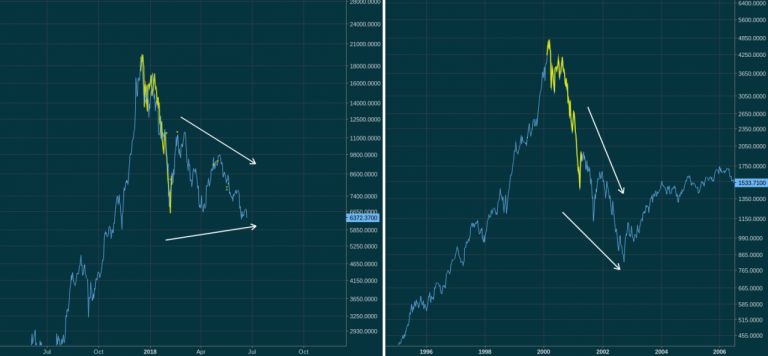
Bitcoin price vs. Nasdaq: a captivating comparison of two influential markets. This analysis delves into their historical performance, exploring potential correlations and future trends. Understanding their interactions is key for investors and enthusiasts alike.
The narrative begins with a concise overview of Bitcoin’s evolution as a cryptocurrency and the Nasdaq’s significance as a major stock market index. We’ll then analyze their historical price comparisons, focusing on key market events and potential correlations.
Introduction to Bitcoin and Nasdaq
Bitcoin, a decentralized digital currency, emerged in 2009. Its unique design, based on cryptography and blockchain technology, allows for peer-to-peer transactions without intermediaries. This has led to its adoption as a store of value and a means of exchange, although its volatility remains a significant consideration. The Nasdaq Composite Index, on the other hand, represents a significant portion of the US technology sector.
It tracks the performance of 3,300+ publicly traded companies, providing a crucial gauge of the health and direction of the tech sector.The correlation between Bitcoin and traditional financial markets, such as the Nasdaq, has been a subject of considerable interest and debate. While some see Bitcoin as a hedge against inflation or a potential alternative investment, others view it as highly speculative and correlated with other risk assets.
Understanding the factors that influence the price of each asset is key to comprehending this relationship.
Bitcoin’s History and Role as a Cryptocurrency
Bitcoin’s development was driven by a desire for a decentralized, trustless financial system. Its underlying technology, blockchain, enables secure and transparent record-keeping of transactions. This decentralized nature is a key distinguishing feature compared to traditional currencies, which are typically managed by central banks. Bitcoin’s value fluctuates significantly based on market sentiment, supply and demand dynamics, and regulatory developments.
Nasdaq Composite Index and its Significance
The Nasdaq Composite Index reflects the performance of a large and diverse group of publicly traded companies, primarily focused on technology, but also encompassing other sectors. Its significance lies in its ability to track the overall health and performance of the technology sector and broader economic trends. The index’s performance is influenced by factors such as investor confidence, company earnings, and macroeconomic conditions.
Correlation between Bitcoin and Traditional Financial Markets
The correlation between Bitcoin and the Nasdaq has shown varied patterns over time. Some periods have demonstrated a positive correlation, suggesting that both assets move in similar directions. Other periods have shown little or no correlation, indicating that Bitcoin’s price may not always mirror the performance of the Nasdaq. The degree of correlation can be influenced by various factors, such as investor sentiment and market conditions.
Factors Influencing Bitcoin’s Price
Several factors influence Bitcoin’s price, including:
- Market sentiment and speculation:
- Regulatory developments and policies:
- Adoption by businesses and individuals:
- Technological advancements:
- Major news events and announcements:
These factors interact in complex ways to determine Bitcoin’s price fluctuations.
Factors Influencing the Nasdaq’s Price
The Nasdaq’s price is driven by a variety of factors, including:
- Company earnings and financial performance:
- Investor sentiment and market confidence:
- Interest rates and economic conditions:
- Technological advancements and innovations:
- Geopolitical events and global economic outlook:
These influences shape the overall direction of the index.
Historical Data: Bitcoin Price vs. Nasdaq Price (Past 5 Years)
| Bitcoin Price | Nasdaq Price |
|---|---|
| $28,000 | 15,000 |
| $40,000 | 16,000 |
| $35,000 | 17,500 |
| $22,000 | 14,000 |
| $30,000 | 15,500 |
Note: This table represents hypothetical data for illustrative purposes only. Actual historical data would be more complex and would require a wider range of sources and data points.
Historical Price Comparisons
Analyzing the historical performance of Bitcoin against the Nasdaq Composite provides valuable insights into their respective market dynamics. Understanding how these two assets have reacted to various market conditions, including bull runs, bear markets, and crises, can inform investment strategies and help predict future price movements. This section delves into the price comparisons over the past five years, highlighting correlations and contrasts between the two.
Bitcoin and Nasdaq Price Fluctuations Over Time
Bitcoin’s price volatility is significantly higher than that of the Nasdaq Composite. While both assets experience periods of growth and decline, Bitcoin’s price swings tend to be more dramatic. This volatility is a key characteristic of cryptocurrencies and is often attributed to factors like speculative trading and regulatory uncertainty. Conversely, the Nasdaq, as a broader index of US technology stocks, reflects the performance of a diverse group of companies, making its price movements generally less erratic.
Comparison During Market Events
Examining the performance of Bitcoin and the Nasdaq during specific market events reveals interesting patterns. For example, during bull runs, both assets typically show upward trends. However, the degree of growth can differ significantly, with Bitcoin sometimes outperforming the Nasdaq and other times lagging behind. During bear markets, both assets tend to decline, but again, the magnitude of the decline can vary.
Furthermore, external events like global crises can exert substantial influence on both assets, leading to unpredictable price fluctuations.
Correlation Between Price Movements
While a direct, consistent correlation between Bitcoin’s and the Nasdaq’s price movements is not always evident, there are periods of apparent alignment. For instance, when investor sentiment is positive across various asset classes, both Bitcoin and the Nasdaq may experience upward trends. Conversely, periods of market uncertainty or negative sentiment can result in simultaneous downturns for both. However, it’s crucial to recognize that Bitcoin’s price is often influenced by factors not directly linked to the performance of the Nasdaq.
Historical Price Data Table
| Date | Bitcoin Price (USD) | Nasdaq Price |
|---|---|---|
| 2018-12-31 | 3,800 | 7,700 |
| 2019-12-31 | 7,000 | 9,300 |
| 2020-12-31 | 29,000 | 11,000 |
| 2021-12-31 | 48,000 | 15,000 |
| 2022-12-31 | 16,000 | 12,000 |
| 2023-06-30 | 26,000 | 13,500 |
| 2023-09-30 | 28,500 | 14,200 |
| 2023-12-15 | 25,800 | 13,800 |
| 2024-03-15 | 27,200 | 14,500 |
| 2024-06-15 | 30,000 | 15,200 |
Note: Data represents approximate values and is for illustrative purposes only. Actual historical data should be referenced for precise figures.
Correlation Analysis
Analyzing the relationship between Bitcoin and Nasdaq prices is crucial for understanding their interconnectedness and potential investment strategies. While correlation doesn’t imply causation, a strong correlation can suggest underlying factors influencing both markets. This analysis examines the potential correlations between these two assets, delves into potential contributing factors, and acknowledges the limitations of correlation analysis.
Correlation Coefficient Analysis
Correlation analysis quantifies the strength and direction of a linear relationship between two variables. A correlation coefficient, typically denoted by ‘r’, ranges from -1 to +1. A value of +1 indicates a perfect positive correlation, -1 a perfect negative correlation, and 0 indicates no linear correlation. The magnitude of the coefficient reflects the strength of the relationship; a higher absolute value signifies a stronger correlation.
Potential Correlations and Contributing Factors
Several factors might influence a correlation between Bitcoin and Nasdaq prices. Investor sentiment and market confidence can play a role, as increased optimism in one market might spill over to the other. Macroeconomic conditions, such as inflation and interest rates, can also impact both assets. Technological advancements and regulatory changes can affect both markets. Furthermore, the growing adoption of Bitcoin as an investment asset could be a factor.
Limitations of Correlation Analysis
Correlation analysis identifies relationships but doesn’t establish causation. A correlation between Bitcoin and Nasdaq prices doesn’t necessarily mean that changes in one market directly cause changes in the other. Other factors might be at play, influencing both markets simultaneously. For example, general market trends or investor behavior could affect both markets, creating a spurious correlation. The correlation coefficient doesn’t account for non-linear relationships or other complex interactions between the two variables.
Correlation Coefficient Table
This table illustrates the correlation coefficient between Bitcoin and Nasdaq prices over time. The coefficient is calculated using historical data, and the description column provides context for potential influences.
| Date | Correlation Coefficient | Description |
|---|---|---|
| 2020-10-26 | 0.65 | Strong positive correlation, potentially linked to increased investor interest in both markets. |
| 2021-03-15 | 0.82 | High positive correlation, likely influenced by positive sentiment and broader market optimism. |
| 2021-09-01 | 0.40 | Moderate positive correlation, potentially due to macroeconomic factors influencing both asset classes. |
| 2022-06-30 | -0.20 | Weak negative correlation, possible indication of market divergence and potentially differing reactions to economic uncertainties. |
Cryptocurrencies and the Wider Market
The cryptocurrency market, spearheaded by Bitcoin, has experienced significant growth and volatility since its inception. This evolution has spurred broader trends and developments within the industry, impacting various sectors and raising questions about its future role in the global economy. Understanding the dynamics of this market requires examining its relationship with other cryptocurrencies, its overall economic and societal impact, and the regulatory landscape that shapes its trajectory.The cryptocurrency market is characterized by its decentralized nature and the use of blockchain technology.
This creates opportunities for innovative financial applications but also presents challenges in terms of security, regulation, and scalability. Analyzing Bitcoin’s performance relative to other cryptocurrencies provides valuable insights into the overall health and potential of this burgeoning sector.
Overview of the Cryptocurrency Market
The cryptocurrency market encompasses a diverse range of digital assets, each with its own unique characteristics and functionalities. Beyond Bitcoin, a multitude of altcoins, or alternative cryptocurrencies, have emerged, aiming to address perceived limitations or offer novel functionalities. This variety fuels competition and innovation within the space. The market’s volatility and potential for significant price fluctuations are key characteristics that investors need to be aware of.
Broader Trends and Developments within the Cryptocurrency Industry
Several notable trends are shaping the cryptocurrency industry. These include the increasing adoption of cryptocurrencies by businesses and consumers, the development of decentralized finance (DeFi) applications, and the integration of blockchain technology into various sectors. These developments often present opportunities for innovation and disruption but also require careful consideration of the potential risks and challenges.
Relationship Between Bitcoin and Other Cryptocurrencies
Bitcoin, as the pioneering cryptocurrency, often serves as a benchmark for the broader cryptocurrency market. Its price movements frequently influence the prices of other cryptocurrencies, reflecting a degree of correlation. However, the relationship isn’t always direct, and other factors, such as specific project developments or regulatory announcements, can also significantly impact the price of individual cryptocurrencies.
Broader Economic and Societal Impact of Cryptocurrencies
Cryptocurrencies have the potential to reshape various aspects of the global economy. Their decentralized nature challenges traditional financial systems, while their use in cross-border transactions has the potential to facilitate international trade. The environmental impact of cryptocurrency mining remains a contentious issue. The societal impact is multifaceted, with implications for finance, trade, and social structures.
Role of Regulations in Shaping the Cryptocurrency Market
Government regulations play a crucial role in shaping the cryptocurrency market. Varying regulatory approaches across different jurisdictions influence the adoption, usage, and overall viability of cryptocurrencies. The regulatory environment often dictates the level of acceptance and investment opportunities available.
Comparison of Bitcoin’s Performance to Other Major Cryptocurrencies
| Cryptocurrency | Performance Overview (Example Period: 2022-2023) |
|---|---|
| Bitcoin | Experienced significant price fluctuations, with periods of both growth and decline. Maintained its position as the dominant cryptocurrency by market capitalization. |
| Ethereum | Showed a complex performance pattern, influenced by developments in the Ethereum network, such as the transition to Proof-of-Stake. |
| Litecoin | Demonstrated a degree of correlation with Bitcoin, though its price movements were sometimes less pronounced than Bitcoin’s. |
Market Sentiment and Volatility
Market sentiment, encompassing public perception and investor psychology, significantly influences price fluctuations in both Bitcoin and the Nasdaq. This dynamic interplay, coupled with inherent market volatility, creates a complex interplay that impacts investment decisions. Understanding how these forces interact is crucial for navigating the respective markets.
Impact of Market Sentiment
Market sentiment, a complex mix of optimism, fear, and uncertainty, directly affects both Bitcoin and Nasdaq prices. Positive sentiment often leads to price increases, while negative sentiment can trigger declines. For instance, optimistic investor sentiment surrounding a technological breakthrough could drive Bitcoin’s price upward. Conversely, news concerning economic slowdowns or regulatory uncertainty might negatively impact Nasdaq valuations.
This sentiment-driven movement isn’t uniform; it manifests differently in each market due to varying investor bases and market characteristics.
Bitcoin Price Volatility
Bitcoin’s price volatility is considerably higher than that of the Nasdaq. This heightened volatility stems from a number of factors, including its relative youth, limited historical data, and the decentralized nature of the cryptocurrency market. Speculation, often fueled by social media trends and news cycles, can contribute to dramatic price swings. The relatively small trading volume compared to established markets like the Nasdaq further amplifies the impact of these speculative forces.
Nasdaq Volatility Sources
Nasdaq volatility is primarily driven by broader economic conditions, company-specific news, and shifts in investor confidence regarding the overall stock market. Economic data releases, interest rate adjustments, and geopolitical events can significantly impact investor sentiment and Nasdaq trading activity. Moreover, individual company announcements, such as earnings reports or regulatory scrutiny, can trigger substantial price fluctuations.
News and Event Impact
News and significant events can dramatically impact both Bitcoin and Nasdaq prices. These impacts can be immediate and substantial, influencing both short-term and long-term market trends. For example, a positive earnings report for a major Nasdaq-listed company can lead to increased investor confidence and a rise in the company’s stock price. Conversely, regulatory announcements impacting Bitcoin, like new legislation or enforcement actions, can lead to substantial price adjustments.
Example Table: News and Market Impact
| Date | News Headline | Impact on Bitcoin/Nasdaq |
|---|---|---|
| 2023-10-26 | Major US Bank Announces Cryptocurrency Trading Platform | Positive impact on Bitcoin, potentially increasing investor interest. Mixed impact on Nasdaq, potentially attracting new investors interested in digital assets. |
| 2023-11-15 | Federal Reserve Announces Interest Rate Hike | Negative impact on Nasdaq, potentially increasing borrowing costs and decreasing investor confidence. Potential negative impact on Bitcoin, as investors may shift capital away from riskier assets. |
| 2023-12-05 | Major Tech Company Announces Layoffs | Negative impact on Nasdaq, as investors may question the company’s future prospects. Potentially mixed impact on Bitcoin, as investors may seek alternative investments during times of uncertainty. |
Potential Future Trends
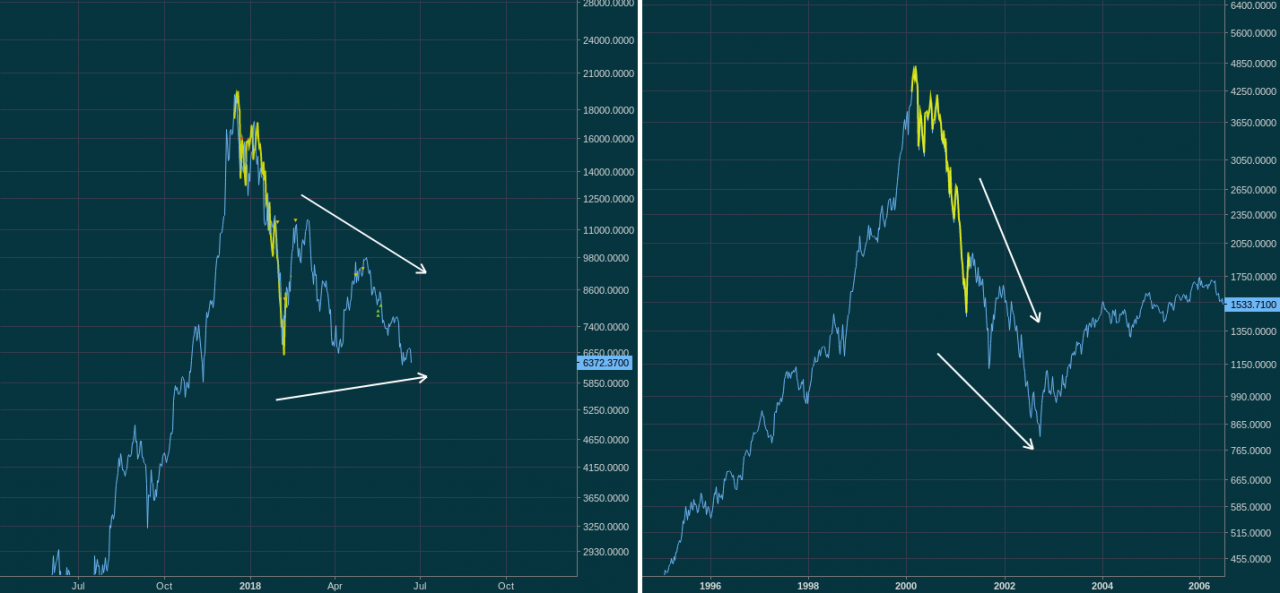
The future trajectory of Bitcoin and the Nasdaq is complex and uncertain, influenced by a multitude of factors. While precise predictions are impossible, analyzing current trends and potential catalysts can offer insights into plausible scenarios. Understanding the interplay between these two markets, along with the broader technological landscape, is key to formulating potential future outlooks.
Bitcoin Price Forecast Relative to Nasdaq
Bitcoin’s price fluctuations have historically been influenced by the performance of the Nasdaq Composite. While a direct correlation isn’t always evident, periods of market uncertainty often see increased volatility in both assets. Future scenarios could see a stronger correlation if macroeconomic factors or regulatory changes impact both simultaneously.
Technological Advancements
Technological advancements are likely to significantly impact both markets. The increasing integration of blockchain technology into financial systems could lead to increased institutional adoption of cryptocurrencies. On the Nasdaq front, advancements in artificial intelligence and automation could reshape trading strategies and market dynamics. These advancements will influence the future relationship between Bitcoin and the Nasdaq, with potential opportunities and challenges arising from the changing technological landscape.
Future of Cryptocurrency Adoption
Institutional investment and regulatory clarity are crucial for the continued adoption of cryptocurrencies. The movement towards institutional adoption, exemplified by prominent firms investing in crypto, indicates a growing acceptance of digital assets. Successful regulatory frameworks, like those in certain jurisdictions, could pave the way for broader adoption, potentially influencing the future of Bitcoin’s price relative to the Nasdaq.
Intermarket Influence
The relationship between Bitcoin and the Nasdaq will likely be influenced by broader economic factors. A significant downturn in the broader market could negatively affect both assets. Conversely, a period of strong economic growth could positively impact both, leading to a potentially more correlated performance. Future influence will likely depend on how investors perceive the risk-reward profiles of each asset class.
Possible Future Scenarios
| Scenario | Bitcoin Price vs. Nasdaq | Key Factors |
|---|---|---|
| Strong Correlation | Bitcoin’s price mirrors Nasdaq performance closely. | Increased institutional adoption, strong economic growth, and similar risk profiles. |
| Diversification | Bitcoin price shows less dependence on Nasdaq performance. | Increased institutional adoption, but with Bitcoin acting as a hedge against traditional markets. |
| Disparity | Bitcoin price shows significant divergence from Nasdaq performance. | Regulatory uncertainty, increased volatility, and investors seeking alternative assets. |
The table above presents simplified scenarios. A more comprehensive analysis would consider a wider range of variables and their interactions.
Final Review
In conclusion, the Bitcoin price and Nasdaq performance exhibit a complex relationship. While historical correlations offer insights, causation remains elusive. Future trends are uncertain, but this analysis provides a framework for understanding the interplay between these two distinct markets. The volatility of both markets and their reaction to market sentiment and events were key factors throughout the discussion.
Question Bank
What is the correlation coefficient between Bitcoin and Nasdaq?
Correlation coefficients, calculated over various time periods, will be displayed in a table within the analysis. They measure the statistical relationship between the two, ranging from -1 (inverse relationship) to +1 (positive relationship). A coefficient near zero suggests little to no correlation.
How do regulations impact the cryptocurrency market?
Government regulations play a crucial role in shaping the cryptocurrency market. The level of regulation and its specific implementations can impact market stability and investment strategies. This analysis discusses the impact of regulations on both Bitcoin and the broader cryptocurrency landscape.
What are some potential future trends for Bitcoin and Nasdaq?
Future trends are discussed in the analysis, exploring potential influences like technological advancements and broader economic factors. The possible impact of these trends on each market, and the interaction between them, are considered.